Category: Publications

Posts related to scientific publications

  • A heavy matter for gravitational-wave cosmology

    A heavy matter for gravitational-wave cosmology

    Not long ago, we published a study exploring a new way to measure how fast the Universe is expanding, not only today but also in the past. This method relied on sources of gravitational waves (GWs) emitted by the coalescences of black holes.

    Some of these sources emit no light at all. We call them spectral sirens. Even without light, they can still tell us about the expansion of the Universe. In our previous work, we showed that the key information actually comes from how the mass distribution of BHs changes with distance. Certain characteristic mass scales act like landmarks, allowing us to trace how the Universe expands.

    In our new preprint, we exploit this idea by introducing a new model designed to track an additional mass scale in the BH mass spectrum, around 60 times the mass of the Sun. We applied this model to the latest GW catalog released by the LIGO–Virgo–KAGRA collaboration.

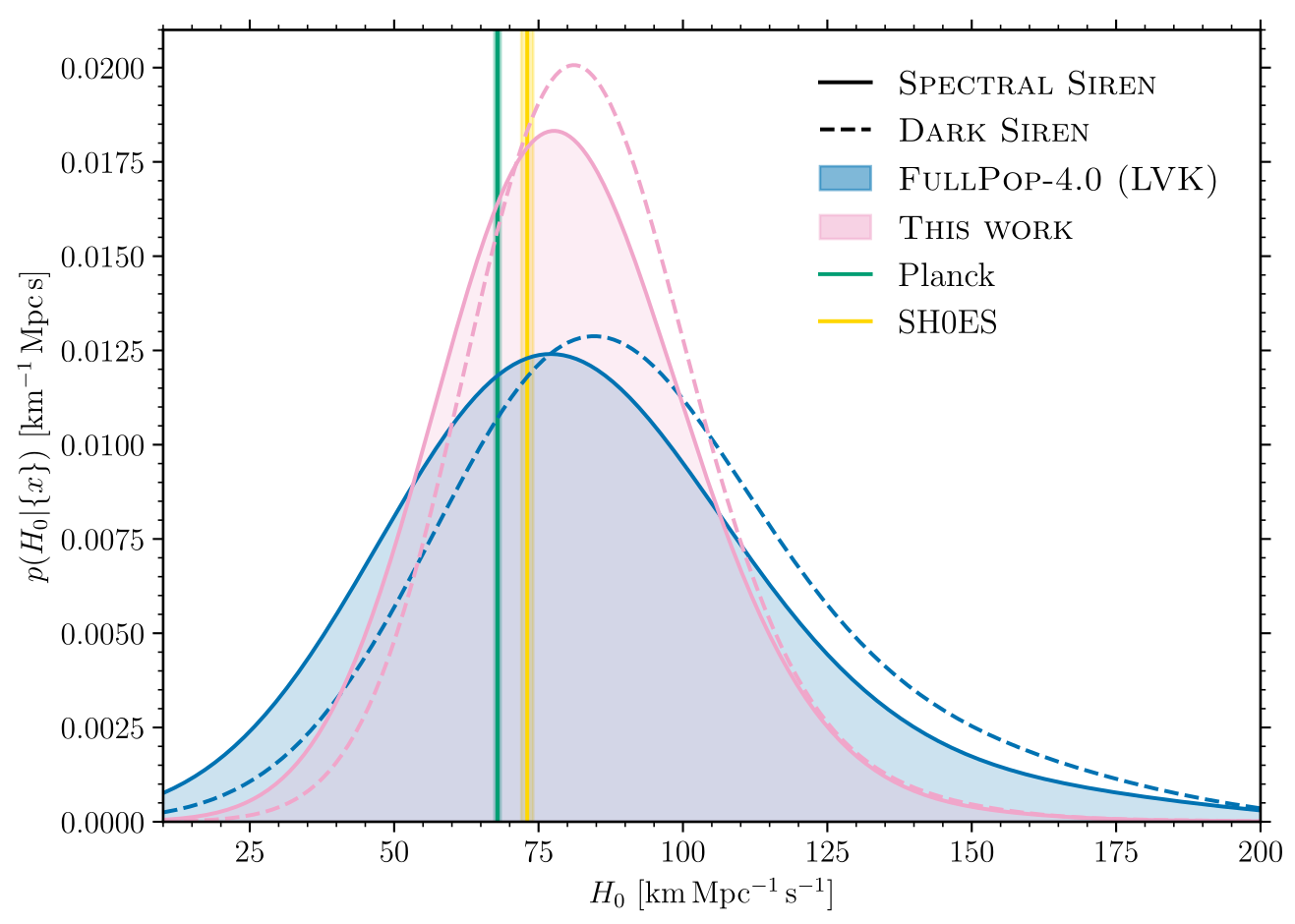
    The result is pretty nice: using spectral sirens alone, we obtained the tightest measurement of the Hubble constant to date, improving the error budget of previous analyses by 36%!
    We also show that this gain in precision comes directly from our ability to measure this new high-mass feature, which complements the already known mass scales around 11 and 27 solar masses. This clearly demonstrates an important point: the most massive BHs play a crucial role in spectral siren cosmology.

    In short, by better understanding how BH masses are distributed across the Universe, we can learn how fast the Universe itself is expanding, even when no light is involved.

    Figure: Probability distribution of the Hubble constant inferred from GWs. Our new result (pink) is compared with the standard LIGO–Virgo–KAGRA analysis (blue). The vertical lines show the latest measurements from Planck and SH0ES defined the so-called Hubble tension.

  • Catching the spin/mass correlations with physics

    Catching the spin/mass correlations with physics

    Sometime ago, Gregoire and I argued for the possible evidence of a spin magnitude/mass correlation for binary black holes observed via Gravitational Waves. In a recent preprint, with colleagues from the University of Rome Sapienza, CERN and Johns Hopkins University, we tried to better understand this correlation by modelling the astrophysical formation channels that can create it.

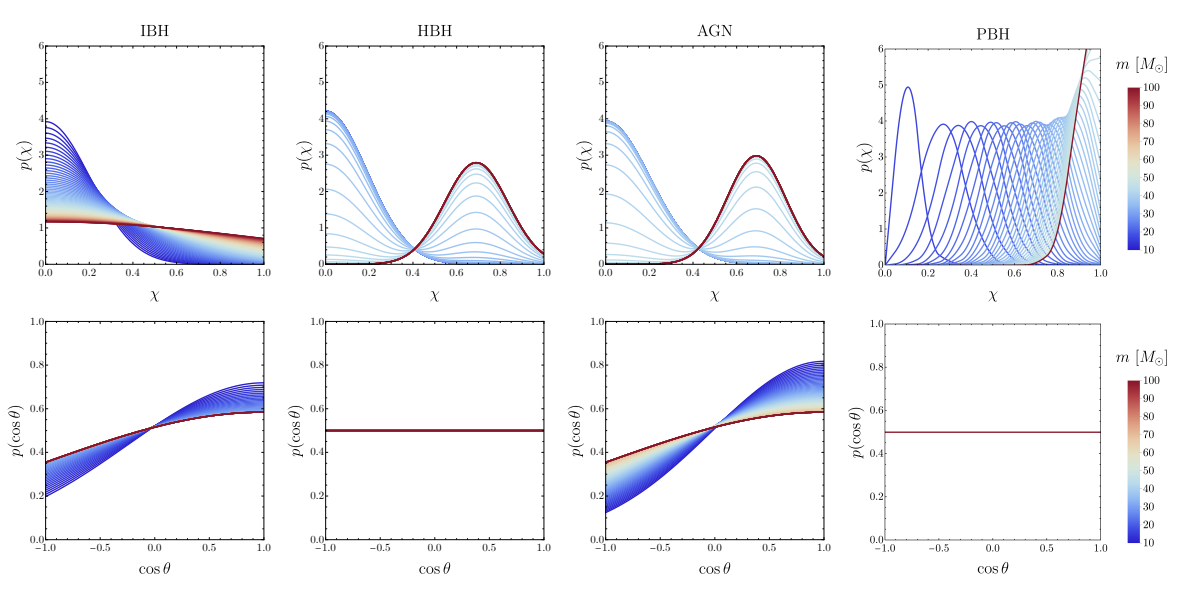
    We looked at possible spin/mass correlations introduced by black holes formed from isolated binary stars, dynamical formation in dense star clusters or in Active Galactic Nuclei (AGN), and primordial black holes. The main result of this study is that we still find this spin magnitude/mass correlation, but now we know a bit

    We have found that Primordial black holes alone can definitely not be the only formation channel of black holes; instead, we need at least two formation channels to describe the data. Unfortunately, we can not say who these channels are at the moment.

    Figure: Top row – spin magnitude distribution as a function of the source mass (colorbar). Bottom row – distribution of the cosine of the tilt angle of the black holes from the orbital angular momentum.

  • Toward a flexible measurement of the cosmic expansion history of the Universe

    Toward a flexible measurement of the cosmic expansion history of the Universe

    With the release of the largest Gravitational Wave (GW) catalog so far — the LIGO-Virgo-KAGRA collaboration’s GWTC-4.0, containing more than 200 candidates — the race to measure the Hubble constant with dark sirens has accelerated.
    But as our measurements of the universe’s expansion improve, new questions emerge: How much do the data themselves drive the results? How robust are our inferences? And to what extent does the choice of cosmological model shape what we conclude?

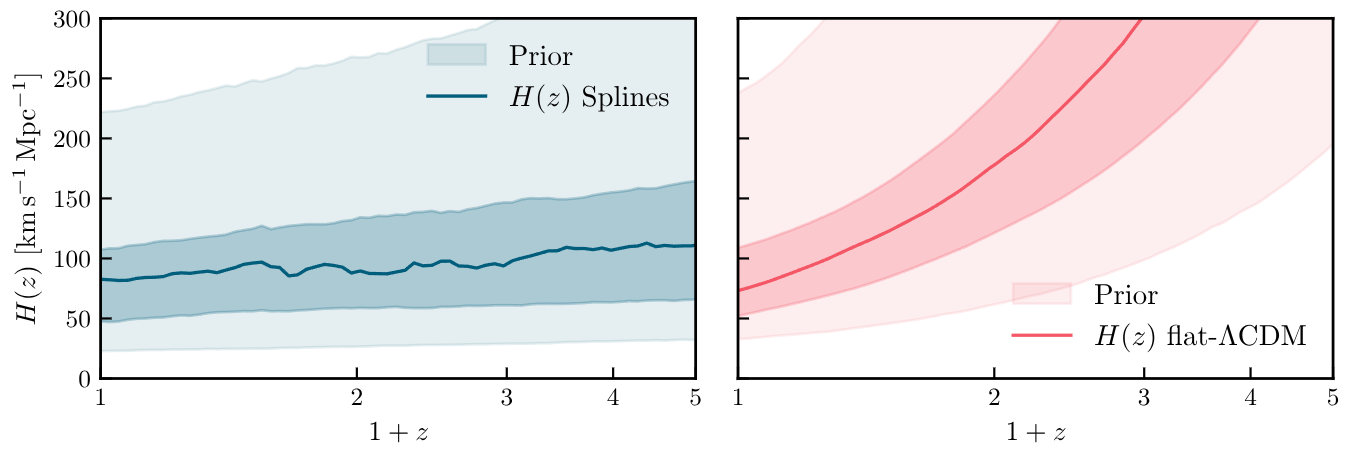
    In our recent work, we take the dark siren approach one step further by moving beyond the usual ΛCDM (Dark Energy and Dark Matter dominated universe) assumption. Instead, we introduce a fully non-parametric method that lets the data speak for themselves. Using 137 binary BH events from GWTC-4.0, we directly reconstruct the cosmic expansion history, the Hubble parameter H(z).

    This work provides the first non-parametric GW-based reconstruction of the Hubble parameter, but it also highlights something deeper: the cosmological model we assume shapes the inferred expansion rate. To make this clearer, we combine our reconstruction with independent measurements from baryon acoustic oscillations in DESI DR2. These external “anchors” help us identify where GW data alone are driving the inference, and where model choices matter most.

    Together with this publication, we also release Gsirens a version of icarogw written in Jax and numpyro to allow for the possibility of sampling hundreds of population parameters.

    Figure: Inferred H(z) from the 137 GW sources of the GWTC-4.0 catalog, using our non-parametric approach (left) and the standard ΛCDM model (right).

  • Is there a bright future for gravitational-wave cosmology with dark sirens?

    Is there a bright future for gravitational-wave cosmology with dark sirens?

    On August 17, 2017, we detected the first gravitational-wave signal from a binary neutron star merger, GW170817. For the first time in history, this event was also accompanied by an electromagnetic counterpart, marking the beginning of the multi-messenger astronomy era. Since then, only one additional binary neutron star merger has been observed—without an electromagnetic counterpart—suggesting that multi-messenger astronomy is currently experiencing a rather quiet phase. However, in about ten years, next-generation gravitational-wave detectors such as the Einstein Telescope and Cosmic Explorer will revolutionize the field, allowing us to detect tens of thousands of sources each year.

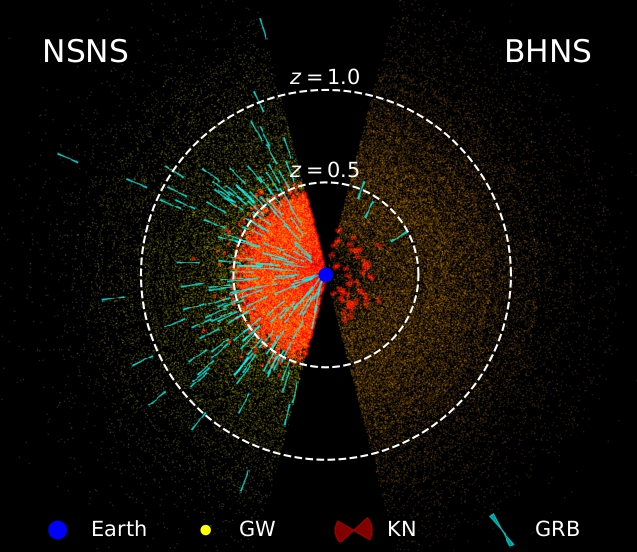
    In this work accepted for publication in Astronomy and Astrophysics, Alberto has simulated populations of BNS and BHNS mergers to provide forecasts of what the multi-messenger universe will look like in the ET era. While the present may seem less promising, the future of this field is extraordinarily bright, with the potential to observe dozens of gamma-ray bursts and hundreds of kilonovae.

    Figure caption: Geocentric universe in the ET era. Points represent gravitationally detected events after five years of ET observations. Red markers indicate potentially detectable kilonovae, while blue markers indicate gamma-ray bursts. Left: BNS mergers. Right: BHNS mergers (in the most pessimistic scenario).

  • Gravitational Wave Cosmology with almost 150 sources

    Gravitational Wave Cosmology with almost 150 sources

    On August 26th, the LIGO-Virgo-KAGRA collaboration released its fourth Gravitational Wave Transient Catalog (GWTC-4), reporting more than two hundred GW signals. This is an impressive number of GW sources, if you consider that the first GW detection was only 10 years ago. And with such and impressive number of sources comes an amazing potential for science.

    One of the flagship studies to which myself the GravitySirens group contributed is the measurement of the cosmic expansion with these sources. This herculean effort has been carried on the shoulders of Gregoire Pierra (GravitySirens postdoc) and Ulyana Dupletsa (postdoc in Vienna and a close collaborator of us). Kudos to them for all the patience and enthusiasm shown in these crazy two years.

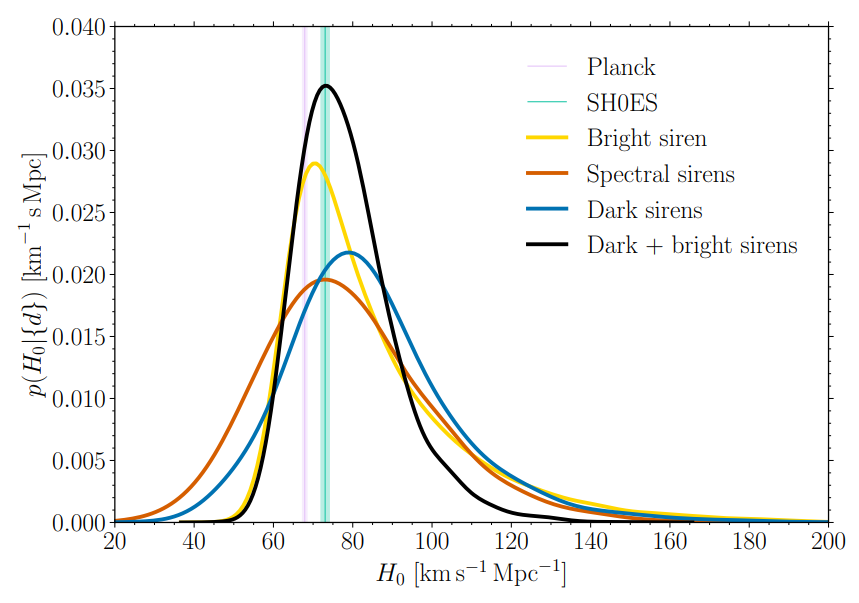
    Going to science now, what we can learn from this latest study is that GW sources without an electromagnetic counterpart are almost as precise in measuring the Hubble constant (cosmic expansion today), almost at the level of GW170817, the only GW source with an electromagnetic counterpart. We should start wandering about systematics for these sources. I am feeling like we are finally becoming real observational cosmologists!

    The cherry on top of all of this is that we released a new version of icarogw, the code used to make the inference. The new release includes updated mass models for binary black holes and also modified gravity models of cosmology!

    Check out the study below

    Figure: Marginalized Hubble constant posteriors generated with GWTC-4 using several sources and models. Check the publication for more details.

  • Back to school: Basics of GW cosmology

    Back to school: Basics of GW cosmology

    With the Gregoire Pierra we just submitted a contributed chapter on GW cosmology for a textbook that is the fruit of a legacy summer school on Gravitational Waves in Europe!

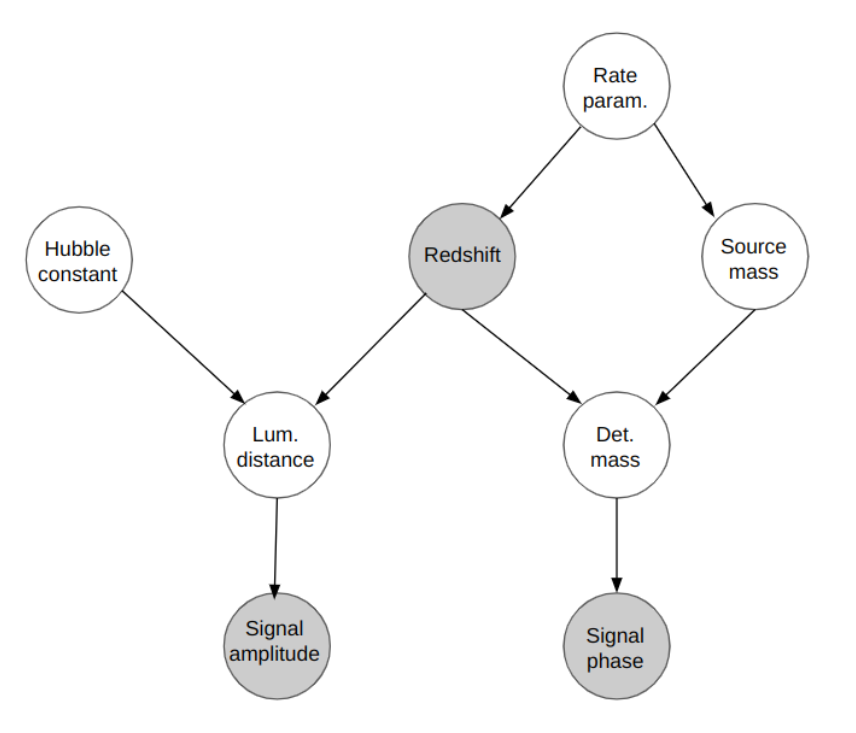
    The chapter really starts from the basics, and try to explain a bit of hierarchical Bayesian statistic and show how we can apply for GW cosmology. Suggested for colleagues entering in the field, undergrads, or if you need to prepare 3-4 hours of lectures.

    Figure: Direct Acyclic Graph showing the conditional relationships of cosmological parameters (Hubble constant) with gravitational wave data.

    Please, feel free to read our paper and reach out to us for any question or suggestion.

  • Neighborhoods are important for cosmology

    Neighborhoods are important for cosmology

    PhD student Gabriele Perna, now a Postdoc,

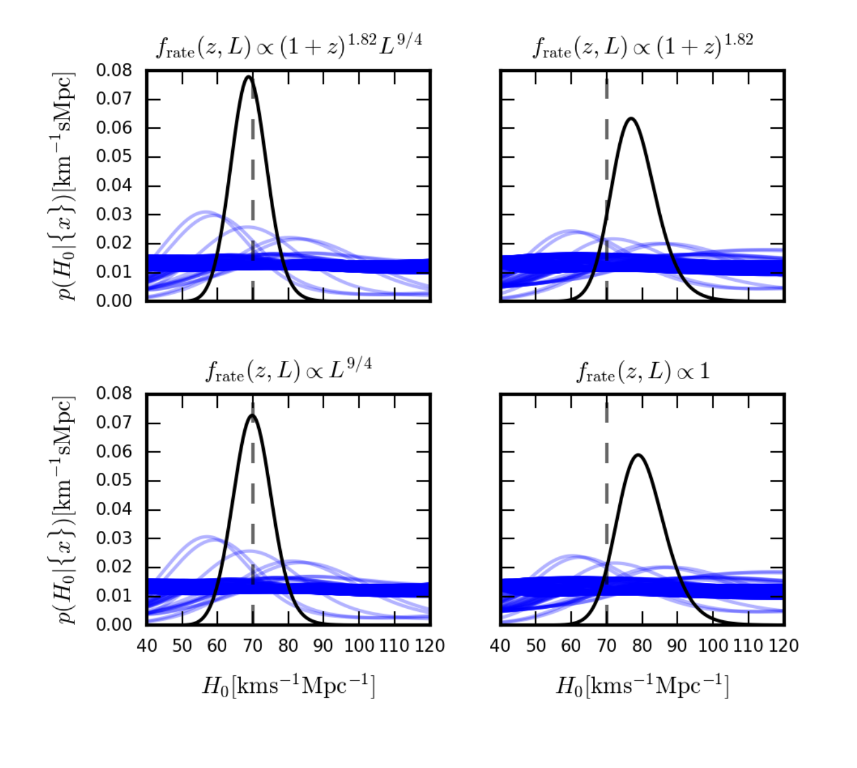
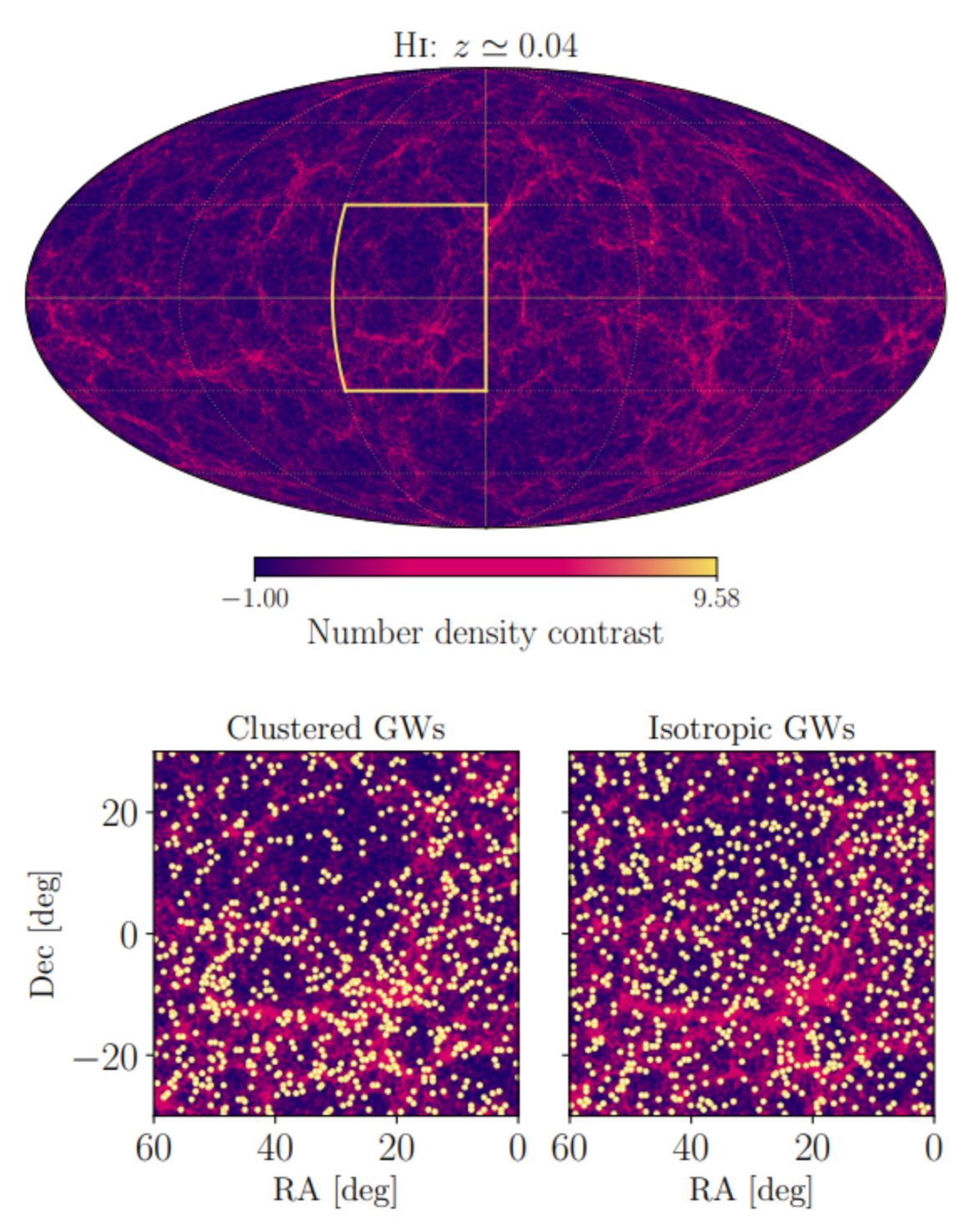
    Our research explores how future gravitational wave (GW) observations—especially those without electromagnetic counterparts—can still be used to infer key cosmological parameters like the Hubble constant (H₀). We investigate how incorrect assumptions about the GW host galaxy distribution, particularly regarding luminosity and redshift, can bias H₀ measurements. Using realistic galaxy and compact binary coalescence simulations, we show that such biases depend on both the observational footprint and distance of GW events. Our findings emphasise the need for accurate modelling of host probabilities when combining GW data with galaxy catalogues.


    Please, feel free to read our paper and reach out to us for any question or suggestion.

    Figure: Hubble constant posterior calculated using 200 well-localised dark sirens when assuming different models for the galaxies’ hosting probability of binary black holes. The true underlying astrophysical population is generated with the model indicated on the top left panel.

  • Sirens on the rough sea

    Sirens on the rough sea

    PhD student Sarah Ferraiuolo presented a new study on how the stochastic gravitational-wave background can improve the measures of the Hubble parameter.

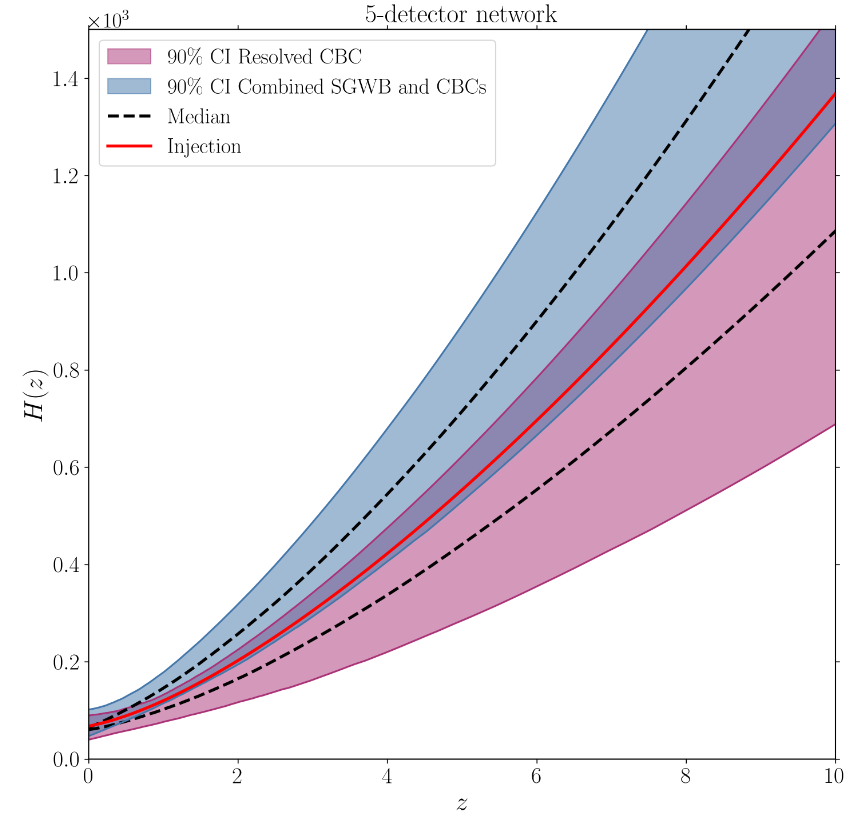
    The individual gravitationa-wave (GW) sources that we see in our detectors are just the tip of the iceberg. Below them, thousands of silent GW sources compose the stochastic GW background (SGWB). In this paper, we demonstrate that the SGWB can be exploited, along with resolved sources,  to measure cosmological expansion parameters.  Its inclusion can help us to constrain cosmological models where the Universe is very old.


    Please, feel free to read our paper and reach out to us for any question or suggestion.

    Figure: Hubble parameter reconstructed from only resolved GW sources (pink) and with the stochastic GW background (blue).

  • A full immersion into parametric models for GW cosmology

    A full immersion into parametric models for GW cosmology

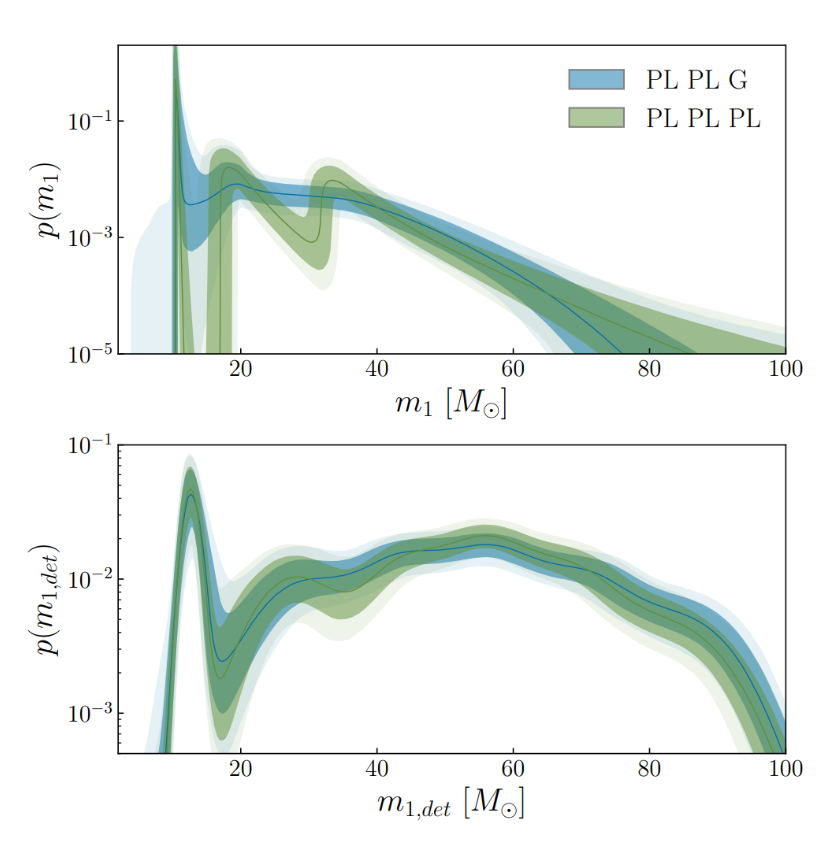
    PhD student Vasco Gennari led an amazing work where we delved into the secrets of the impact of parametric models for the source mass of binary black holes in GW cosmology.

    We present an extensive study on how different parameterizations of the source frame mass spectrum of binary black holes (BBHs) impact the population studies of detected sources. We find that for mass models that are non-evoling in redshift and only model one sharp feature in the mass spectrum, the mass spectrum reconstruction from real data is population prior-dependent. We demonstrate that this can happen when real data contains more than one feature. We also studied a set of parametric models evolving in redshift and found no strong preference against redshift-independent models.


    Please, feel free to read our paper and reach out to us for any question or suggestion.

    Figure: Reconstruction of the astrophysical (top panel) and detected (bottom panel) mass spectrum for two population models with multiple features. Two different models could not be distinguishable as at the detector they would correspond to the same distribution.

  • Spinning Exotic compact objects

    Spinning Exotic compact objects

    With Elisa Maggio and Adriano Frattale-Mascioli we looked at the detected gravitational waves populations as if composed of exotic compact objects.

    Exotic compact objects (ECOs) are proposed alternatives to black holes (BHs) that can mimic their behaviours while removing the event horizon. However, ECOs are subject to ergoregion instability; namely, if their spin is too high, they are unstable. We infer that no more than 20% of the compact objects could be ECOs by looking at the spin distribution of detected GW sources. We also demonstrate that the Einstein Telescope will obtain far better results with just a few days of data-taking.


    Please, feel free to read our paper and reach out to us for any question or suggestion.

    Title: Limits on the existence of totally reflective exotic compact objects with current and future gravitational-wave detectors

    Authors: S. Mastrogiovanni, E. Maggio, A. Frattale-Mascioli

    Figure: Upper limits on the fraction of ECOs as function of the compactness (position of the ECO’s surface from the would-be event horizon).