
Our research activity
Observational Science is a term that encompasses all scientific activities aimed at observing and understanding the physical properties of Gravitational-Wave (GW) sources. Our group is active in a large number of these cases.
Searching for Continuous Gravitational Waves
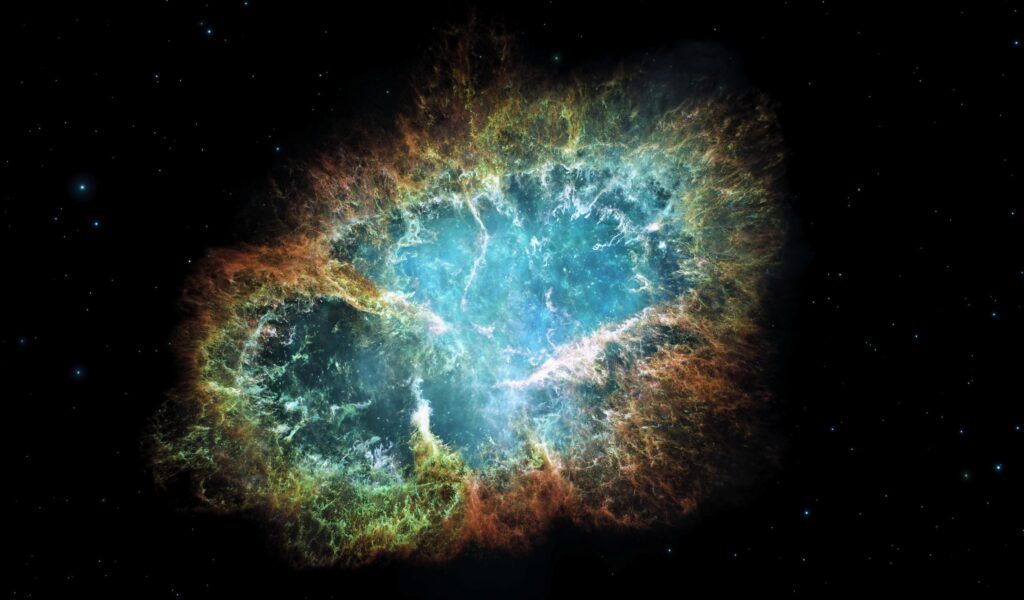
Neutron stars are among the most compact objects in our Universe. These stars are composed of matter close to atomic nuclear density, often rapidly spinning tens or hundreds of times per second. If these stars deviate from a perfectly symmetric shape (even at the level of few microns), or if they are accreting mass from a stellar companion, they emit GWs that can even last for years (and thus the name adjective continuous). In our group we devise advanced and computationally efficient data analysis methods to search for these signals.
Gravitational Waves from compact binary coalescences:
from their detections to their physics
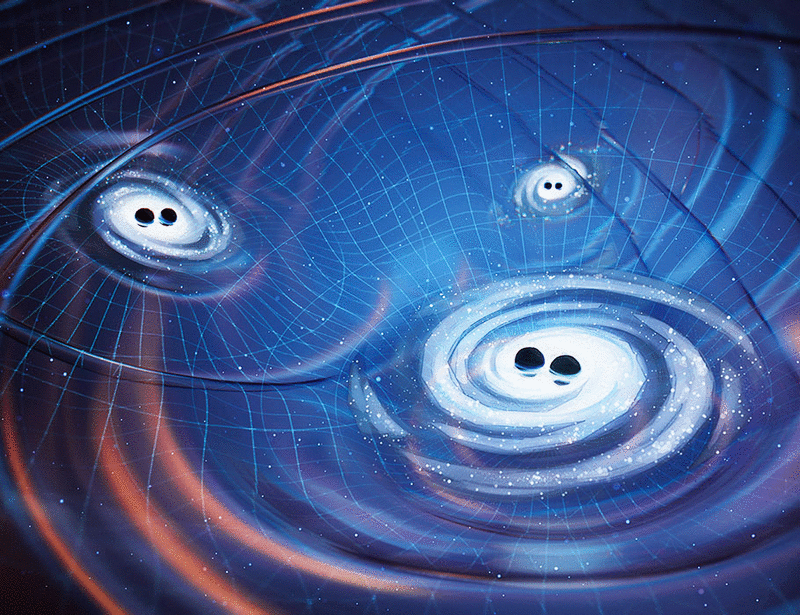
The LIGO-Virgo-KAGRA collaboration is detecting hundreds of milliseconds to minutes GW signals from compact binary coalescences: namely, mergers of two black holes, two neutron stars or a neutron star and a black hole. Our group is active in searching for these transient signals with low-latency codes, as well as searching for Gamma-ray bursts associated with their mergers. We study the tidal deformability of neutron stars involved in these mergers, as well as possible deviations from General Relativity during the merger. Finally, we try to exploit these sources to measure the cosmic expansion and test gravity on cosmological scales.
Search for transient signals of unknown morphology
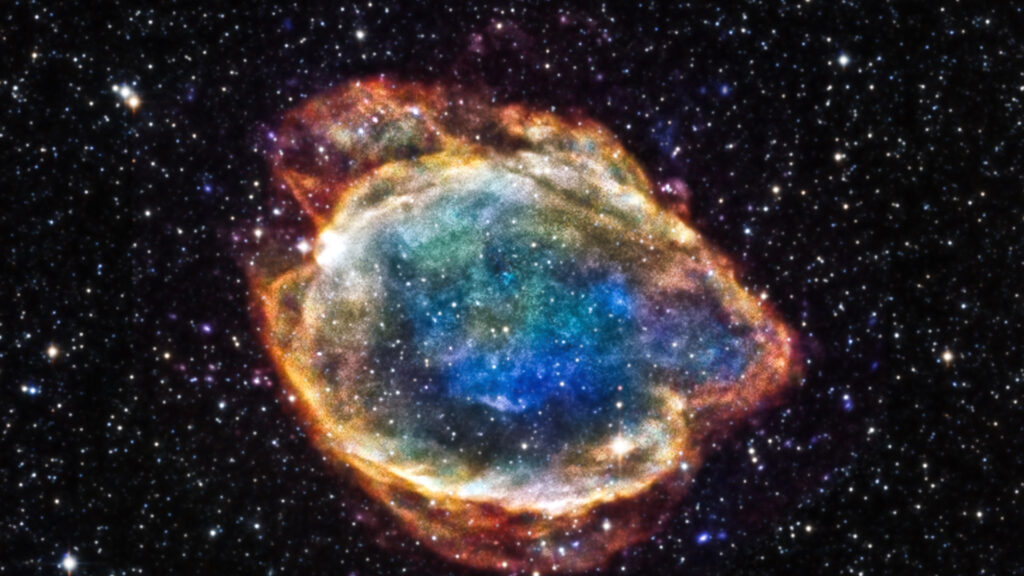
Supernovae are stellar explosions detonated when a massive star exhausts its chain of thermonuclear reactions therefore reaching the end of its life. They are among the most energetic and violent phenomena in our universe. As this explosion lacks spherical symmetry, we expect to observe gravitational waves. Unfortunately, given the numerous possibilities for this source process, the modelization of these signals cannot be exhaustive as it is for compact binary coalescences. For this reason, we use model-agnostic algorithms that make no assumption about the signal morphology and are open to all possible signal emission scenarios, including ones involving unknown astrophysical processes.
Listening to the stochastic gravitational wave background
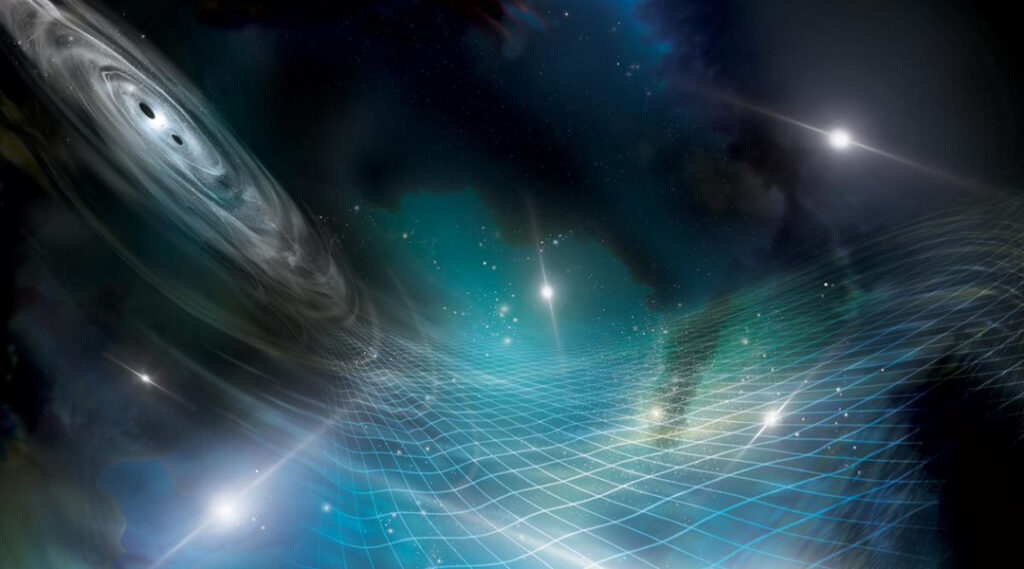
The universe is teeming with gravitational wave sources that are too faint to be directly detected. Together, these countless undetected sources create what is known as the stochastic gravitational-wave background. This background manifests as correlated noise across different gravitational-wave detectors. In our group, we are working on developing innovative methods to detect this background and pinpoint its sources.
Multimessenger astronomy with gravitational waves
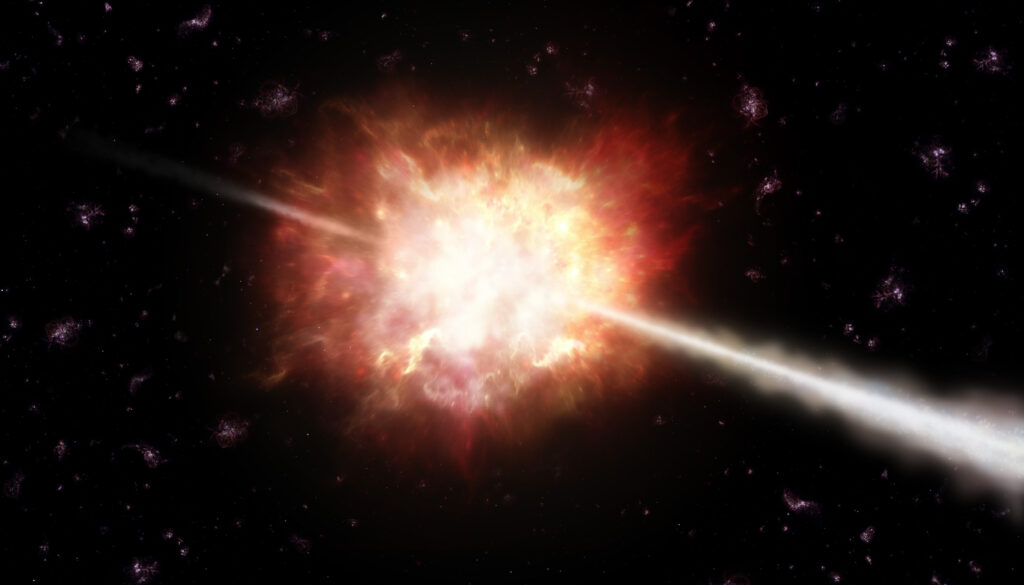
Exploiting and combining information from distinct messengers increases the probability of detecting new events and the scientific yield of their observations. Specifically, we carry out gravitational-wave searches that target the time and sky-position of electromagnetic or neutrino observations, such as those linked to gamma-ray bursts and supernovae. Further, in order to enhance the chances of achieving new multimessenger detections, we develop new algorithms that involve machine learning or neural networks.