Highlights from the BridgeQG@Varna 2026
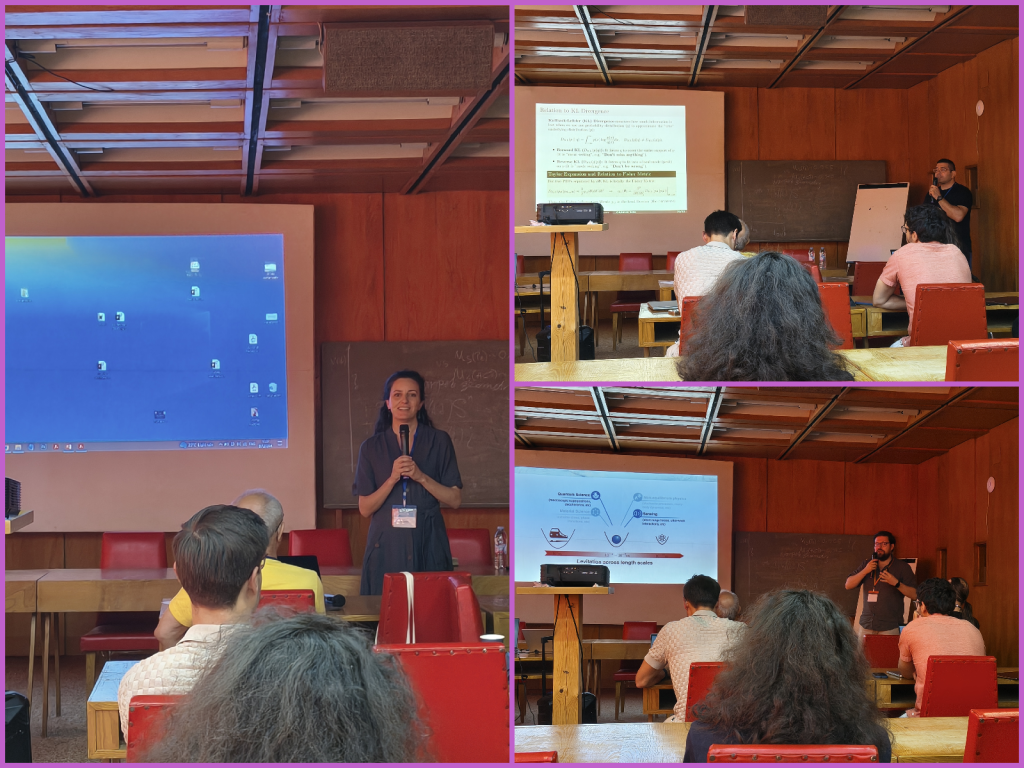
The BridgeQG 2026 conference gathered high-energy and low-energy quantum gravity researchers in Varna, Bulgaria, from 6–9 July 2026. Made possible by COST Action CA23130, it was a fantastic four days of inspiring talks and lively discussions between theory and experiment.
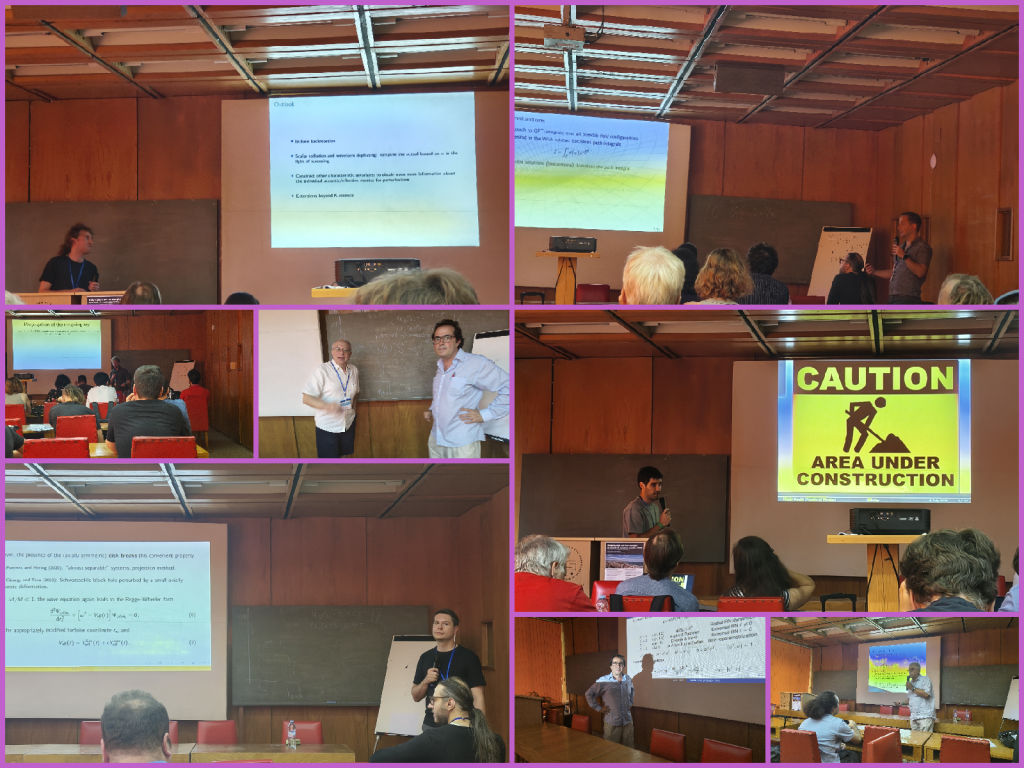
Below is our group photo, alongside highlights from some of the presentations captured throughout the week. For the slides of the participants, please check https://agenda.infn.it/event/50800/contributions.


The conference ended as usual with a MC meeting for the COST Action CA23130.
BridgeQG@Varna 2026

The second annual conference of the COST Action CA23130 will be held in Varna, Bulgaria from 6 to 9 July 2026. It is fully funded by COST Association through COST Action CA23130.
For more info, please visit:
BridgeQG International Outreach Seminar 2026
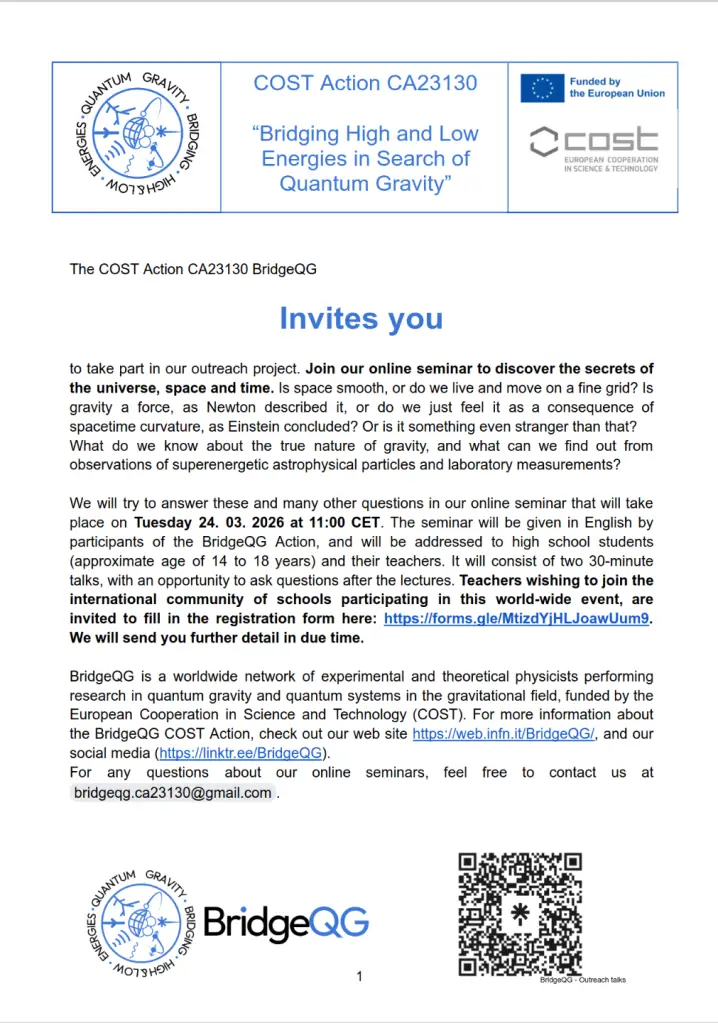
Join BridgeQG for an Online Seminar on Quantum Gravity Explore the secrets of the universe, space, and time in an online seminar hosted by BridgeQG, a global network of physicists funded by COST. Designed for high school students (ages 14–18) and their teachers, the event features two 30-minute talks in English followed by a Q&A session. The seminar will take place on Tuesday, March 24, 2026, at 11:00 CET.
- Teachers can register their schools here: https://forms.gle/MtizdYjHLJoawUum9
- For more information, visit: https://web.infn.it/BridgeQG/ or https://linktr.ee/BridgeQG
- Contact: bridgeqg.ca23130@gmail.com
Lecturers:
Dr. Valentina De Romeri

Title: Dark Matter: The Universe’s Hidden Side
Abstract: In this talk, we will explore the mystery of dark matter, one of the most intriguing open questions in modern physics. We will review the main evidence for its existence, starting from its gravitational effects on galaxies and galaxy clusters, and extending to its crucial role in shaping the large-scale structure and evolution of the Universe. We will then discuss what these observations tell us about the properties dark matter must have, despite being invisible to our optical telescopes. Finally, we will introduce well-motivated dark matter candidates and outline the experimental strategies used to search for their signatures.
Biography: Dr. Valentina De Romeri is a scientist at the Instituto de Física Corpuscular (IFIC, CSIC-UV) in Spain. She obtained a joint PhD in Physics and Astrophysics from the University of Valencia (Spain) and the University of Turin (Italy), and subsequently held postdoctoral positions at the Laboratoire de Physique Corpusculaire of Clermont Auvergne (France) and the Instituto de Física Teórica (IFT, CSIC-UAM) in Madrid (Spain).
Her work explores some of the most fundamental questions about the Universe, focusing on neutrinos and dark matter. Neutrinos are extremely elusive yet abundant particles, that still hide many secrets — such as how they acquire mass. Dr. De Romeri studies how neutrinos interact and oscillate, using experimental data to uncover their properties. She also investigates dark matter, an invisible form of matter that makes up most of the Universe’s mass but whose nature is still unknown to us. By studying different theoretical possibilities and how they could appear in experiments, her research aims to reveal the nature of this mysterious component of the cosmos.
Dr. Mateo Paulišić
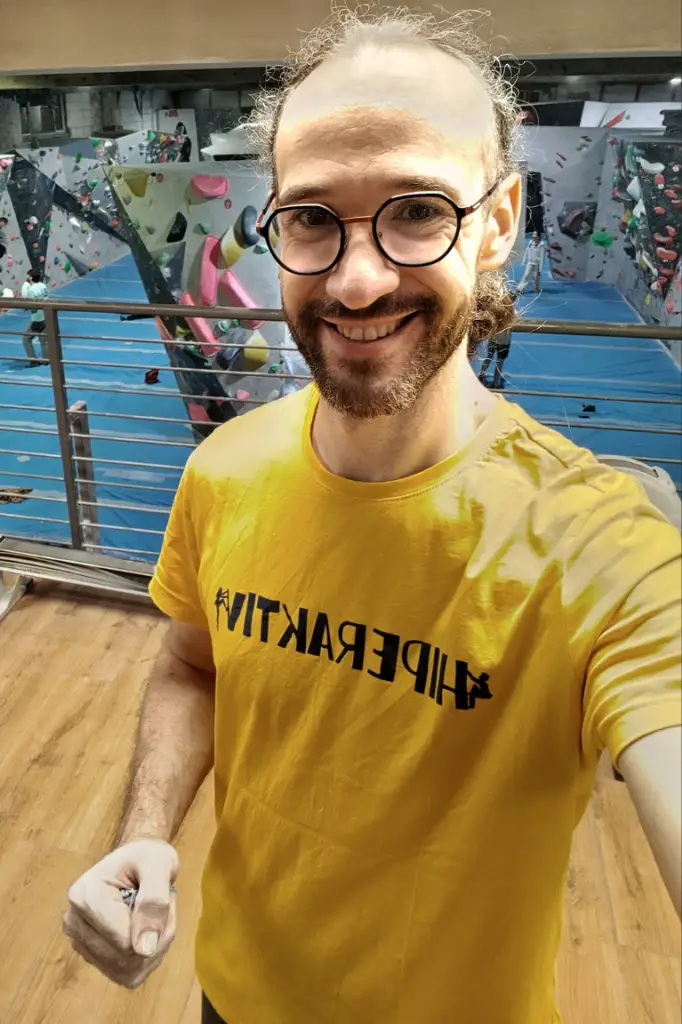
Title: Symmetry: The Stuff of Reality
Abstract: In this talk I will share two beautiful ideas from theoretical physics—no advanced math required. Both of them changed the way we understand how the universe works.
The first is a deep and surprising link between symmetry and the laws of nature. This connection, discovered by Emmy Noether over a century ago, is one of the most powerful ideas in modern science—and it was the one that first pulled me into theoretical physics.
The second idea grows out of this connection. If symmetries shape the laws of physics, then they also tell us which kinds of particles can exist. Using symmetry as a guide, physicists have developed a modern way to build a kind of catalog of all possible fundamental particles—not just the ones we already know, but also the ones that could exist in principle.
Together, these two ideas show how something as simple and elegant as symmetry can lead us to a deeper map of the universe, from the smallest particles to the structure of space and time itself.
Biography: Mateo Paulišić is a theoretical physicist who studies how gravity works, how symmetries shape the laws of nature, and how the building blocks of the universe fit together. He earned his PhD in Physics in 2023 at the University of Rijeka.
He began his studies at the University of Zagreb and continued his research in Rijeka, spending part of his PhD both in Zagreb and Trieste.
From 2016 to 2023 he worked as a teaching and research assistant at the Faculty of Physics in Rijeka, teaching courses in general relativity, classical mechanics, and modern physics. He is now a postdoc at the same faculty. His research lies at the intersection of physics and mathematics, focusing on quantum field theory, gravity, and symmetry.
When he is not thinking about the universe, he sings in a vocal ensemble and climbs indoor walls.
STSM @ University of L’Aquila
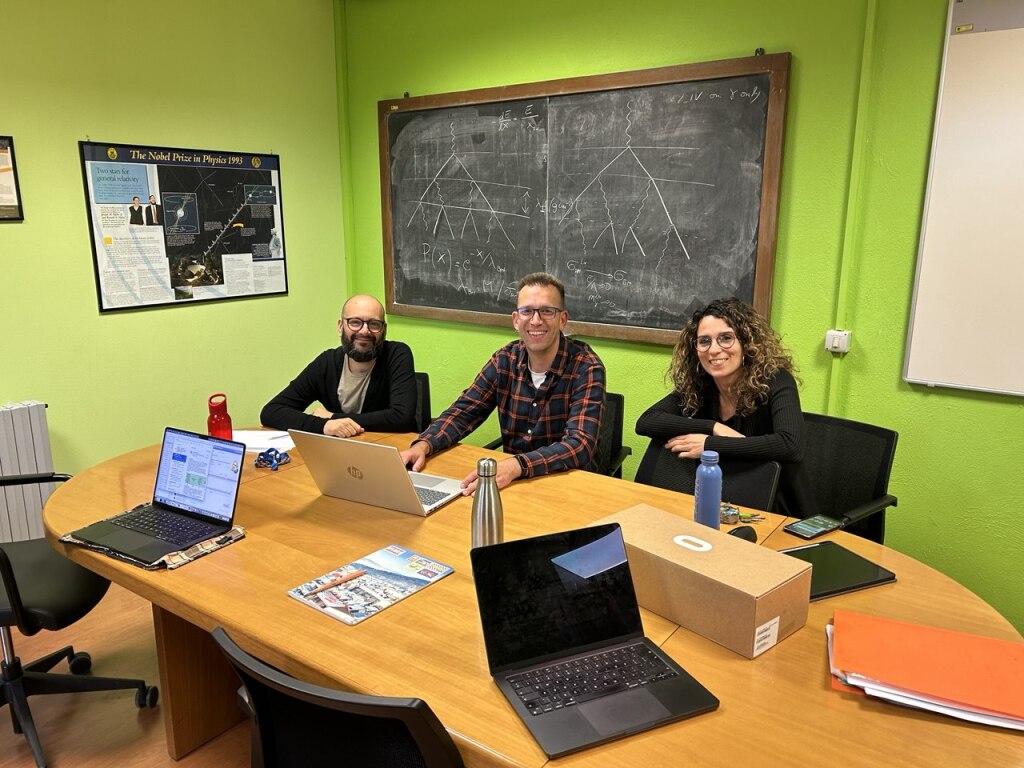
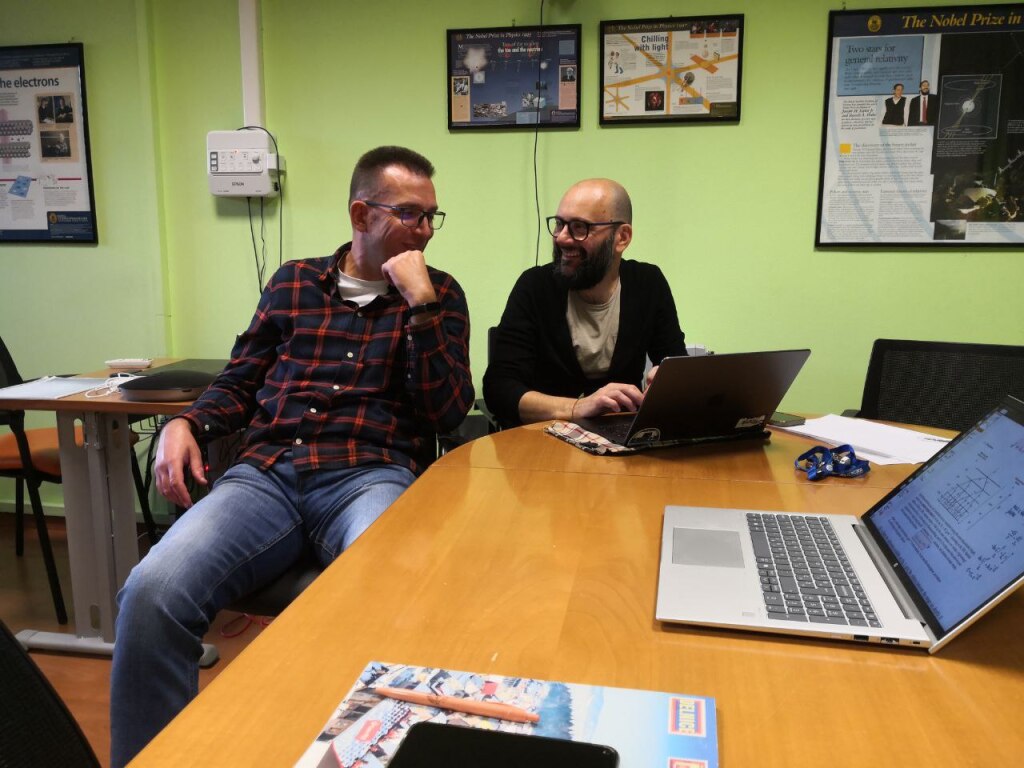
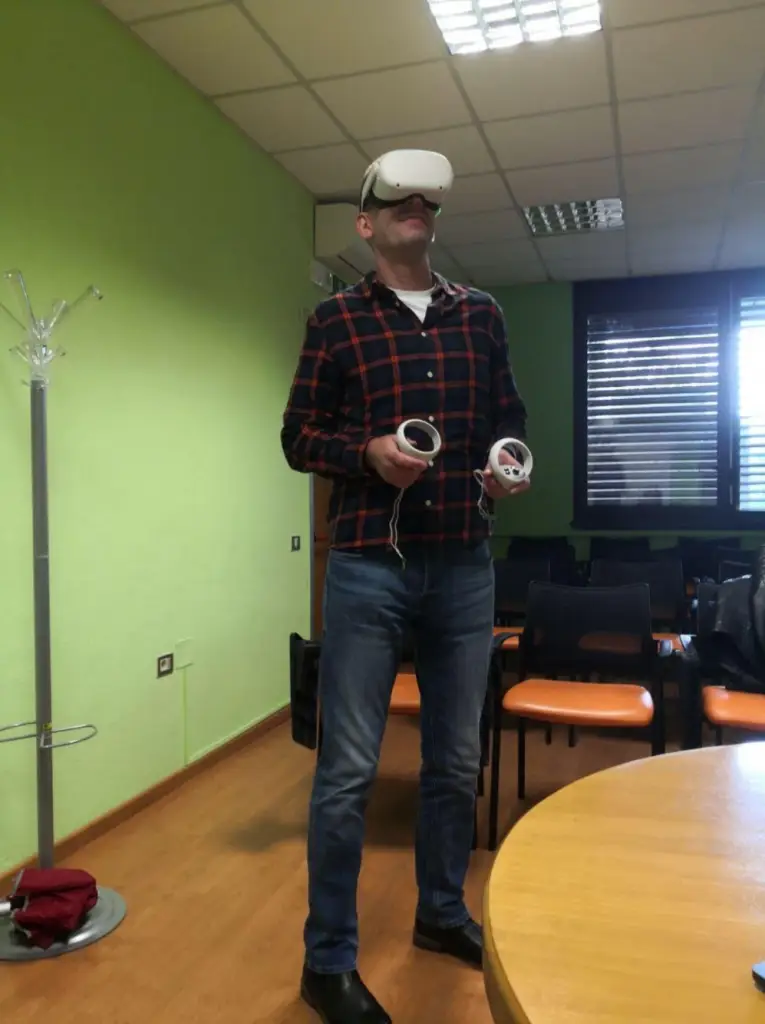
Tomislav Terzić from the Faculty of Physics of the University of Rijeka carried out a Short-Term Scientific Mission (STSM) at the Department of Physical and Chemical Sciences of the University of L’Aquila, where he was hosted by Denise Boncioli and Francesco Salamida. The mission titled “Influence of QG phenomenological models on particle shower development” focused on comparing the Lorentz invariance violation (LIV) studies using cosmic rays and gamma rays with the goal of finding a common ground between these two cosmic messengers. Doubly special relativity (DSR) was discussed as an alternative to LIV and the possibility of testing DSR on the propagation of very high energy photons.
The team was joined by Caterina Trimarelli, a collaborator from the Gran Sasso Science Institute, to discuss a possibility of introducing LIV in the particle shower simulation software CORSIKA. Following the STSM, the team met the CORSIKA developers and agreed to collaborate on this task. Stay tuned to see the outcomes of this collaboration.
Flash Grant Call
BridgeQG is opening a flash call for Short Term Scientific Mission grants, with deadline for application on September 14th and decision notification on September 22nd. Details on the grant and how to apply can be found on the Grant Calls page .
Please note that since all activities of this grant period must end by October 31st, this will be a hard deadline to submit the required report and documents after the visit ends.
Please get in touch with me or the Grant Awarding Coordinator (Julien Bolmont) in case you have any questions.
BridgeQG@High Schools