STSM @ University of L’Aquila

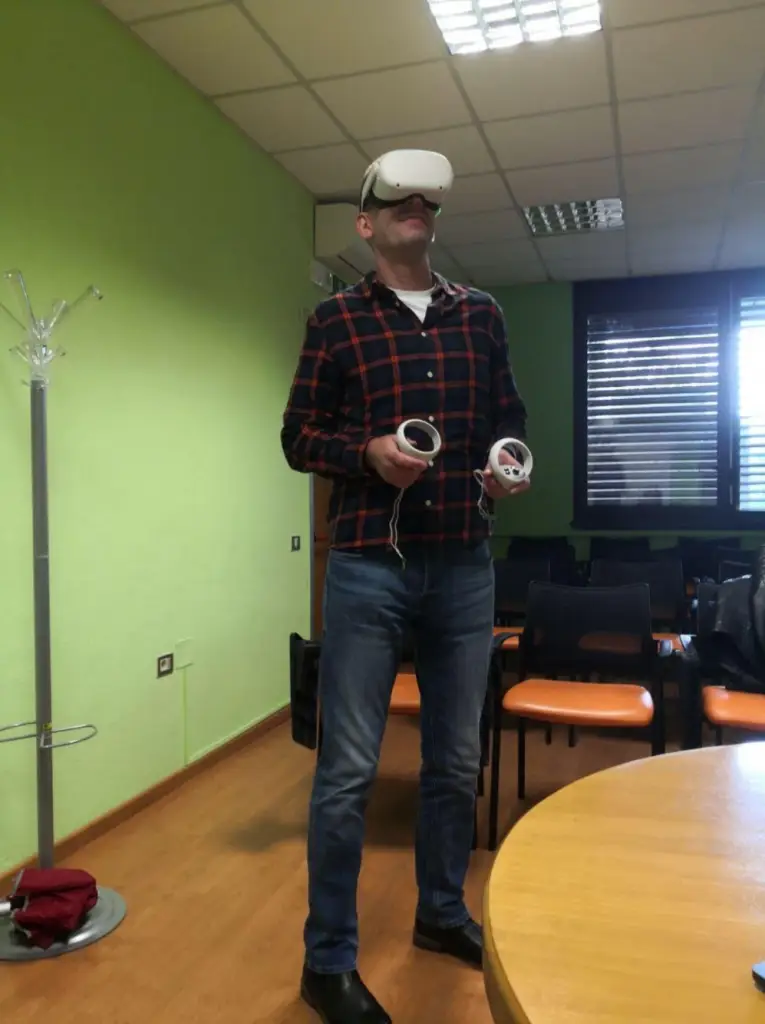
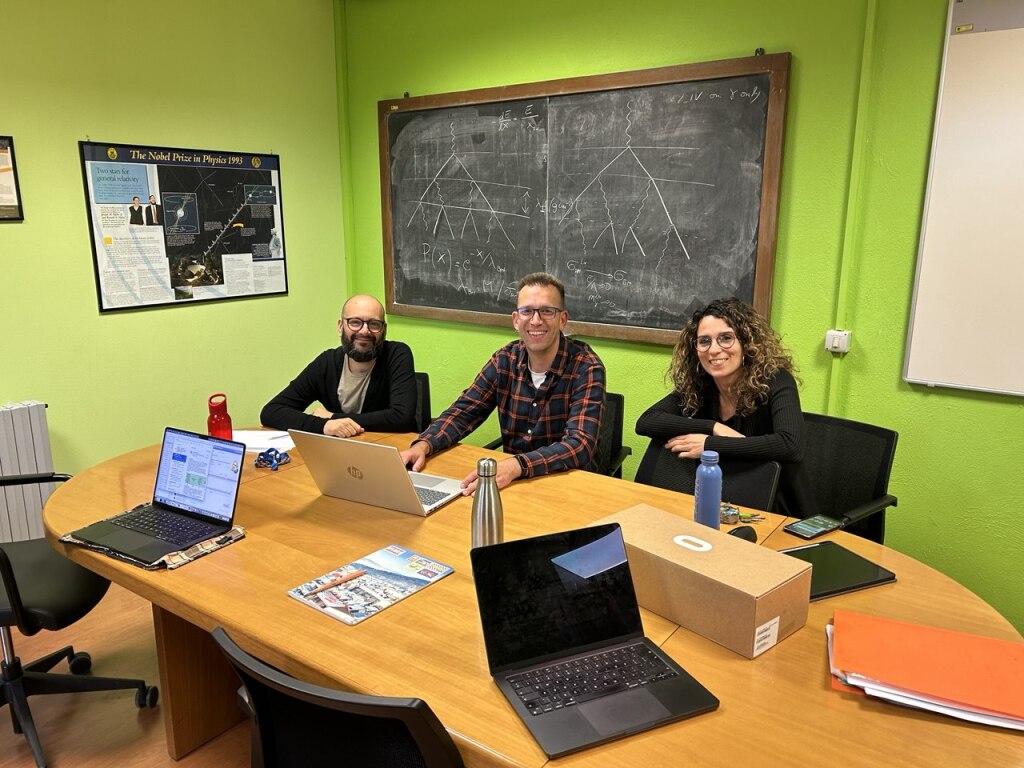
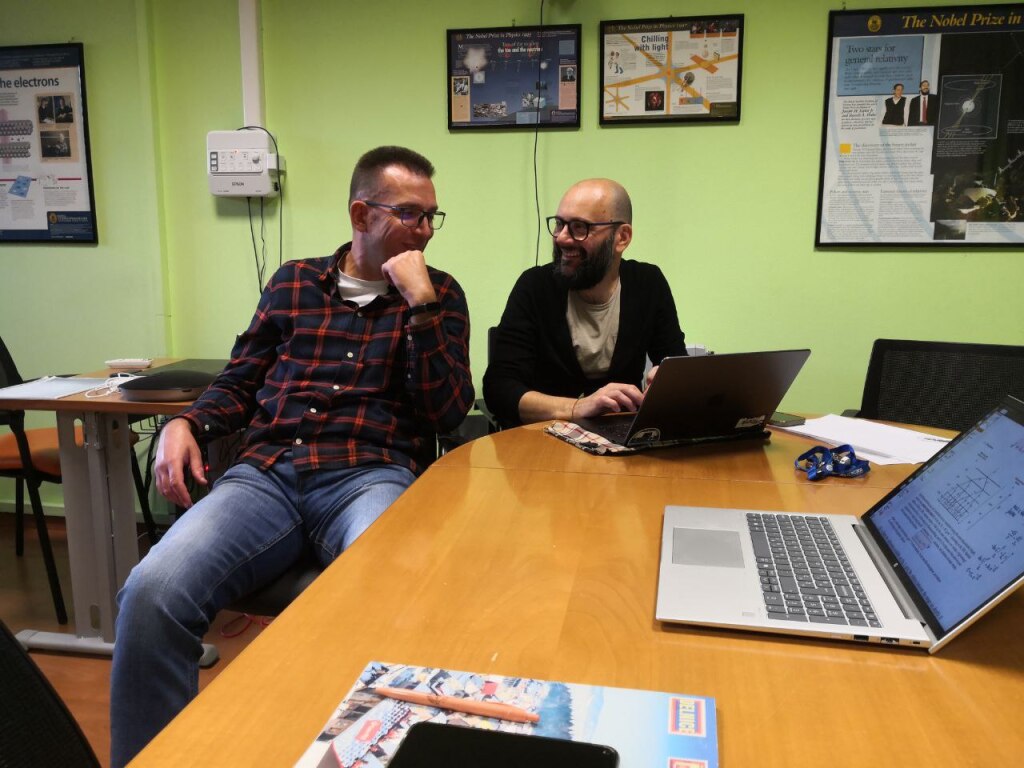
Tomislav Terzić from the Faculty of Physics of the University of Rijeka carried out a Short-Term Scientific Mission (STSM) at the Department of Physical and Chemical Sciences of the University of L’Aquila, where he was hosted by Denise Boncioli and Francesco Salamida. The mission titled “Influence of QG phenomenological models on particle shower development” focused on comparing the Lorentz invariance violation (LIV) studies using cosmic rays and gamma rays with the goal of finding a common ground between these two cosmic messengers. Doubly special relativity (DSR) was discussed as an alternative to LIV and the possibility of testing DSR on the propagation of very high energy photons.

The team was joined by Caterina Trimarelli, a collaborator from the Gran Sasso Science Institute, to discuss a possibility of introducing LIV in the particle shower simulation software CORSIKA. Following the STSM, the team met the CORSIKA developers and agreed to collaborate on this task. Stay tuned to see the outcomes of this collaboration.
Comments

2 responses to “STSM @ University of L’Aquila”

  1. Thank you for sharing the update on the STSM visit at the University of L’Aquila — it’s inspiring to see collaborative research activities and scholarly exchange highlighted so clearly.
    Have you noticed particular benefits from these STSM engagements in terms of new collaborations or insights that might not arise through remote interactions alone?

    1. Tomislav Avatar
      Tomislav

      Thank you for the question. In my view, it is difficult — if not impossible — to overestimate the value of direct, in-person interaction between researchers. The STSM enabled continuous, informal scientific exchange that does not translate well to remote formats: spontaneous discussions, working through ideas at the blackboard, and rapidly testing intuitions in real time. These interactions led to concrete scientific insights and helped establish the shared understanding and mutual trust that underpin effective long-term collaboration. Such outcomes are difficult to quantify, but they are fundamental to how collaborative research actually progresses and are unlikely to arise from scheduled online meetings alone.

      Several ideas initiated during the STSM are still under active development and we are aiming to develop them into a journal publication. For this reason, I cannot go further into technical details at this stage. Nevertheless, I hope my answer paints a clear picture of how important direct contact between researchers is.

Leave a Reply

Your email address will not be published. Required fields are marked *