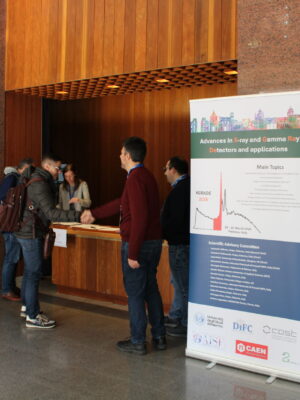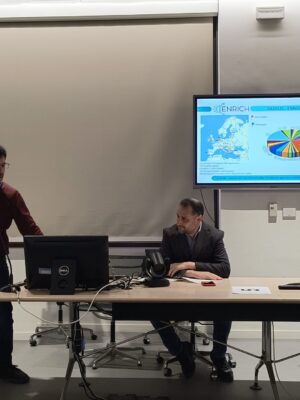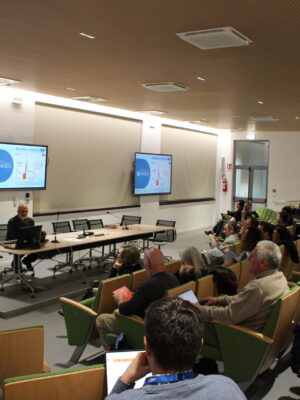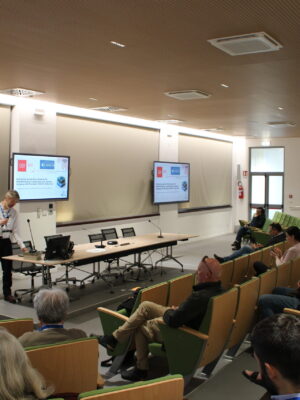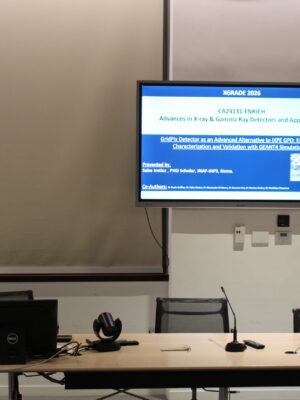
From March 24th to 26th 2026, the University of Palermo (UniPa, Italy) hosted XGRADE 2026 (Advances in X-ray and Gamma RAy DEtectors and applications), the inaugural workshop of the COST Action ENRICH. Organized within WG2, the event was chaired by Leonardo Abbene (UniPa) together with the co-chairs Antonino Buttacavoli (UniPa), Jesel Patel (University of Strathclyde, Glasgow, UK) and Alessandro Scordo, (INFN-LNF, Italy).
The workshop served as a high-level forum to discuss the state-of-the-art and the future of X-ray and γ-ray detector technology – from material improvement to electronic readout – software, including AI and machine learning approaches, for fundamental research and emerging applications, in medicine, astrophysics, environmental monitoring, space science and societal impact. The workshop successfully acted as a catalyst for new European research synergies.
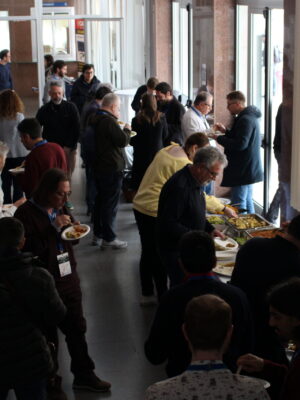
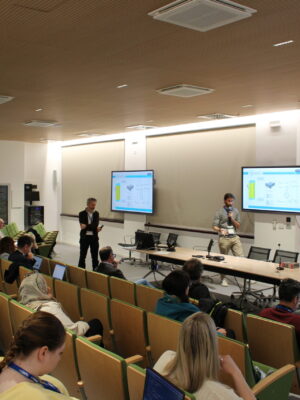
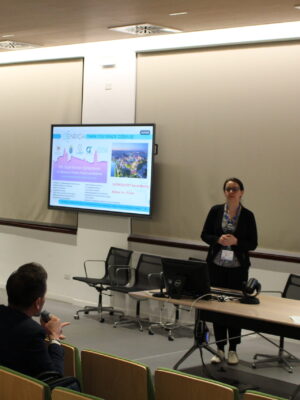
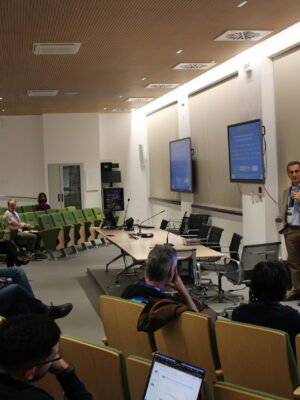
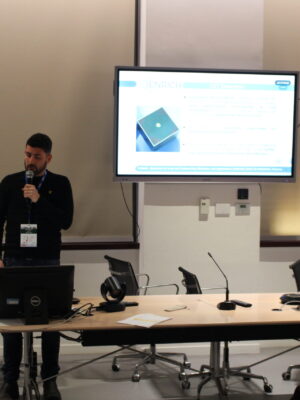
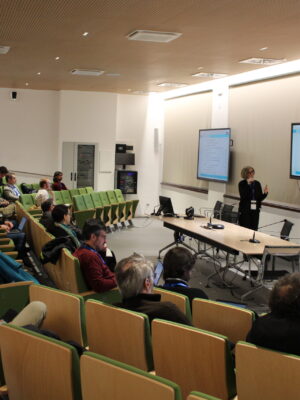
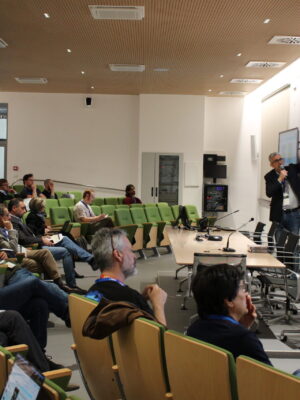
Opening remarks respectively by the XGRADE and ENRICH Cost Chairs Leonardo Abbene and Alessandro Scordo, alongside a welcome from “E. Segrè” Physics and Chemistry Department Director Gioacchino M. Palma, set an engaging tone for the workshop. The event brought together 46 participants for 32 specialized talks (book of abstract), with a strong emphasis on deep-dive Q&A sessions. The program included four main sessions: i) Detectors, ii) Applications, iii) Electronics and Pulse Processing and iv) Data Analysis and Machine Learning. Beyond the formal agenda, coffee breaks and lunches proved fruitful for networking, fostering the “human side” of science and sparking new professional synergies.
The success of the workshop was also made possible by the support of sponsors, including CAEN – Tools for Discovery, due2lab s.r.l., and AISF (Associazione Italiana Studenti di Fisica), along with the institutional support of the University of Palermo and the COST Association.
The Role of the COST Action: Bridging Communities
One of the most compelling outcomes was observing the dynamic intersection between detector development and diverse application fields. It became clear that while many researchers and institutions are developing sensors and detectors that represent the frontier of the state-of-the-art, these innovations are often still confined to specific niches. The discussions highlighted a cross-fertilization of needs and solutions.
A recurring sentiment among technology experts was the desire to break boundaries: “These systems have reached incredible performance levels, and we are now eager to expand their range of applications.” Conversely, experts from various applied fields noted: “The specific features of these detectors would be invaluable for our research challenges, providing the high-performance tools we currently lack.”
This is precisely where the ENRICH COST Action proves its fundamental value. By fostering a collaborative environment, the Action enables a “qualitative leap” through the synergy of different systems. It was inspiring to see participants move beyond their specific domains to brainstorm how a technology developed for one field could find a “new home” and solve problems in another, transforming isolated expertise into a connected European community and reaching their full potential across all scientific disciplines.
Empowering Early Career Researchers (ECR)
As a representative for Early Career Researchers (ECRs) within the ENRICH Cost, I was proud to see that around 20% participants belonged to the ECR category. To further support inclusivity and mobility, the COST Action provided 10 Travel Grants specifically for young researchers and participants from Inclusiveness Target Countries (ITC).
Beyond the financial support, what truly defines the XGRADE experience for an ECR is the atmosphere of ‘flat hierarchy‘. It was empowering to see early-stage researchers engaging in spontaneous, high-level technical discussions with senior experts. This direct access breaks down traditional academic barriers, transforming a daunting scientific challenge into a shared collaborative journey. Inclusivity was further reflected in the event’s excellent gender balance. It was inspiring to see a good representation of women scientists across the sessions, not only as attendees but as key contributors, delivering many of the workshop’s talks and leading several of the technical discussions.
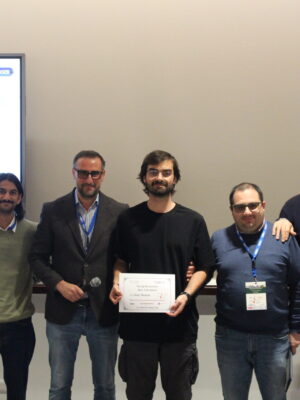
This collaborative spirit was also celebrated with the Best Young Researcher Talk Award: a huge congratulations to Josè Sousa, who received the Award for his presentation titled “ CadTool- a end-to-end x-ray/gamma-ray solid state detector simulation framework”.
Science, Hospitality, and Networking
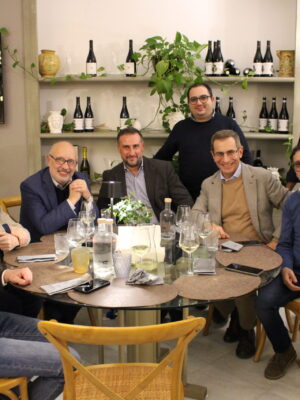
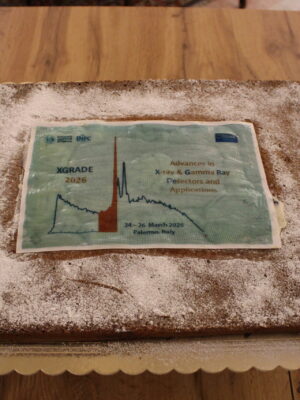
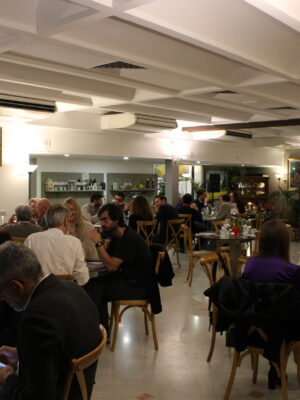
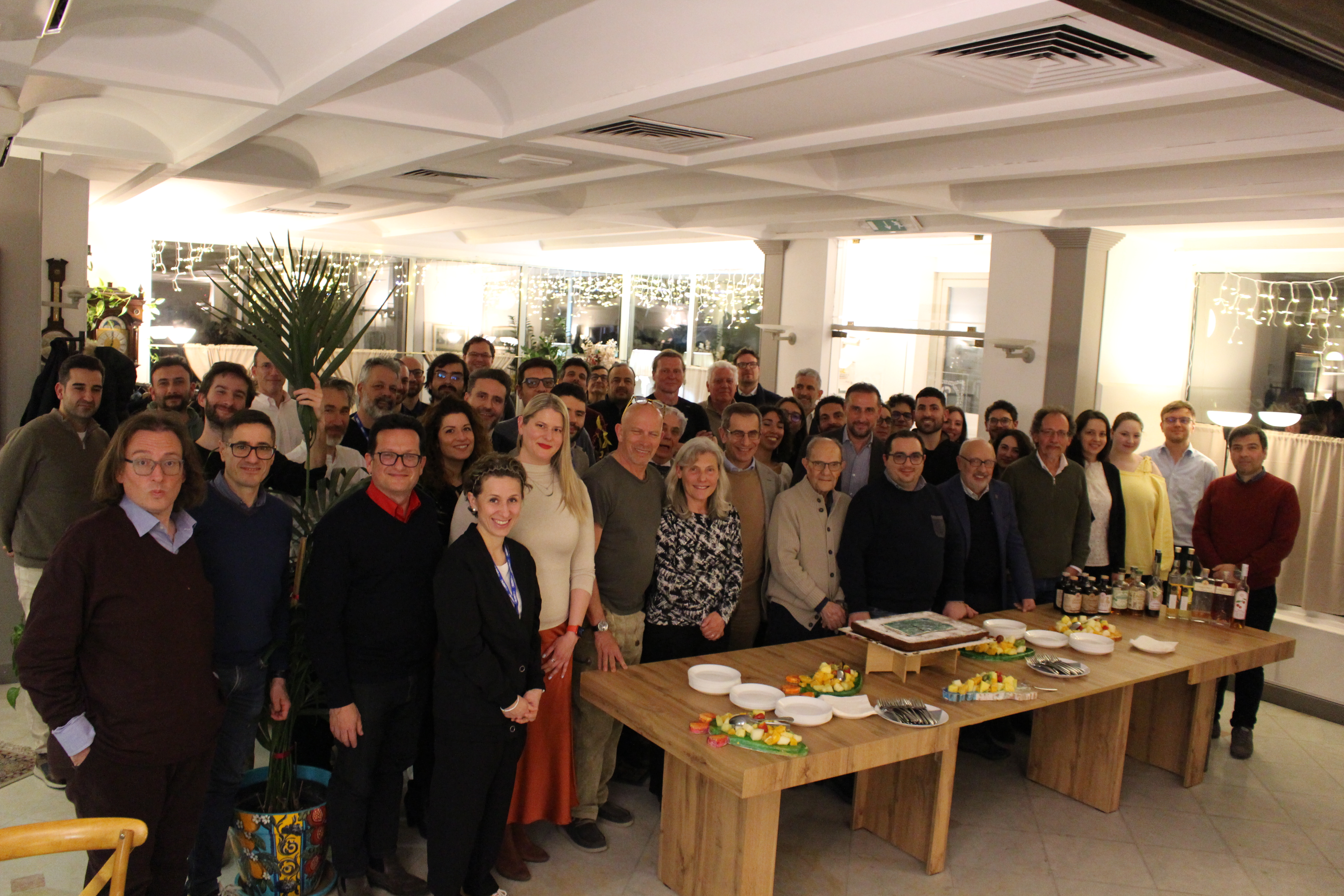
The shared desire to collaborate was evident even in informal moments—like the great social dinner marked by a traditional Sicilian cake, symbolizing the start of a “sweet” and fruitful cooperation.
On a personal level, this experience enriched by the new concepts learned and the connections made. These have already translated into concrete plans for short-term collaborations with other researchers and institutions. These growing inter-links confirm the synergy already blooming between our Working Groups.
We look forward to seeing the community again at the first ENRICH Annual Meeting, taking place in Poland in July 2026!
Eugenia Naselli
Istituto Nazionale di Fisica Nucleare,
Laboratori Nazionali del Sud (INFN-LNS), Catania, Italy
Young Researchers’ Coordinator of the ENRICH Cost Action