








19 Feb High Tech
Basic scientific research increasingly requires high-level technological solutions, and INFN, which has always been a reference point for fundamental physics, also positions itself as a producer and supplier of cutting-edge technologies.
However, the link between INFN and high tech is not limited to pure research, but extends to technology transfer and innovation. In fact, technologies designed for fundamental physics often find entirely new and different applications. Typical examples include particle detectors developed for accelerators that can be used to improve the performance of medical imaging devices; advanced data acquisition and analysis algorithms that become tools for early cancer diagnosis; or accelerator technology itself, which is put at the service of medicine for cancer treatment.
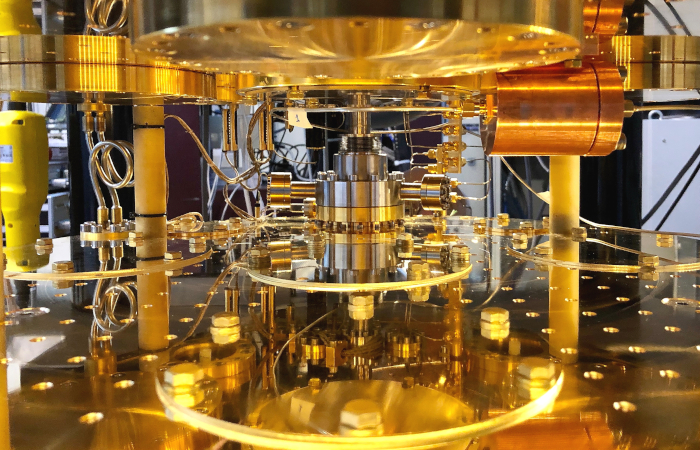
But the advanced technologies developed within INFN can find unprecedented ways to generate a positive impact on everyday life. Thus, cryogenic systems that enable the extremely low temperatures necessary for the operation of superconducting accelerators or for neutrino physics experiments are used for valve testing to be installed in hydrogen transport systems that power rockets and future means of transport; or to increase the sensitivity of instruments that analyze the contamination of food and soil. Techniques for surface finishing and coating with thin layers of special materials, originally studied for accelerating cavities, are instead used to develop more economical and sustainable processes for the production of industrial components, such as rolling mill rolls.
The high tech generated and developed within INFN therefore represents an invaluable asset that the Institute, through Technology Transfer, is called upon to make available to society. To do this, INFN has various instruments at its disposal. The first is the execution of license agreements. Research personnel, in carrying out their work, continuously generate new knowledge that sometimes also concerns new tools, processes, and methods, potentially useful even outside the scope of activity in which they originated. While on the one hand this knowledge must be protected with instruments such as patenting or know-how protection, on the other hand it must also be made available and valorized. For this reason, INFN executes license agreements, in which it grants a corporate partner the right to exploit its knowledge in a specific field and for a determined period.
It often happens that knowledge is developed together with another party, following collaborative research agreements, by virtue of which INFN and a company work together to develop a product of interest to both, which will then be used by the Institute to carry out its research activity and by the company for commercial purposes. The intellectual property generated in this case is shared between the parties, and regulated by specific joint ownership agreements.
There are cases where the company itself approaches INFN because it recognizes its value as a technology provider and requires specific expertise and equipment that are not available elsewhere. Technology transfer, therefore, takes place through a provision of services by INFN, or a research contract from the company which, thanks to the Institute, increases its technological level.
The human capital of INFN should not be forgotten: people who have been trained and have carried out research work at INFN, who have acquired high-level skills, but also method, ability to address and solve problems, initiative, and scientific curiosity, and who can bring this wealth of experience to the outside, to society, either by working in other organizations or through the creation of spin-offs that exploit INFN technologies.

